
Reimagining Vegan Products Everyone Loves
The Challenge
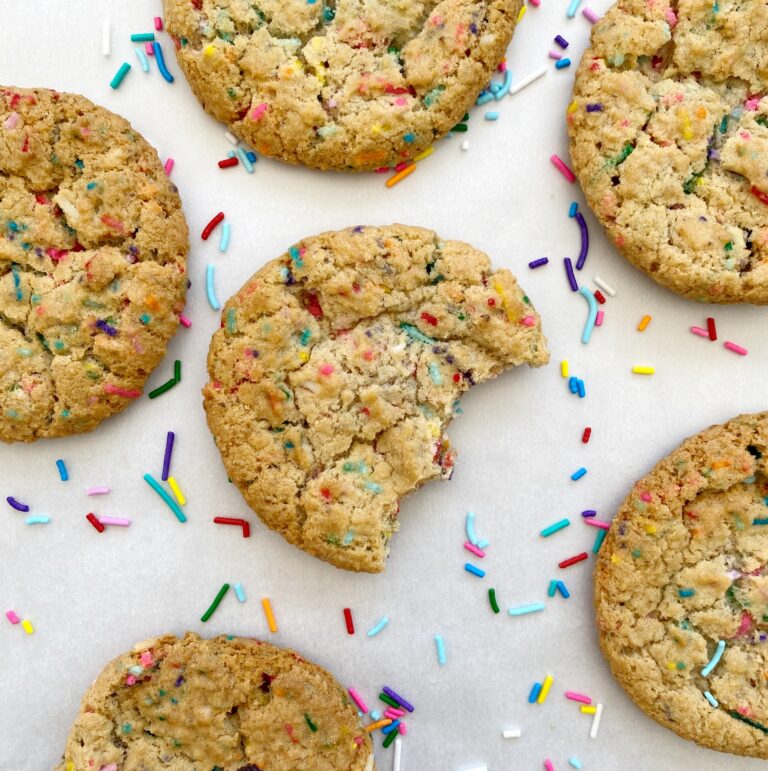
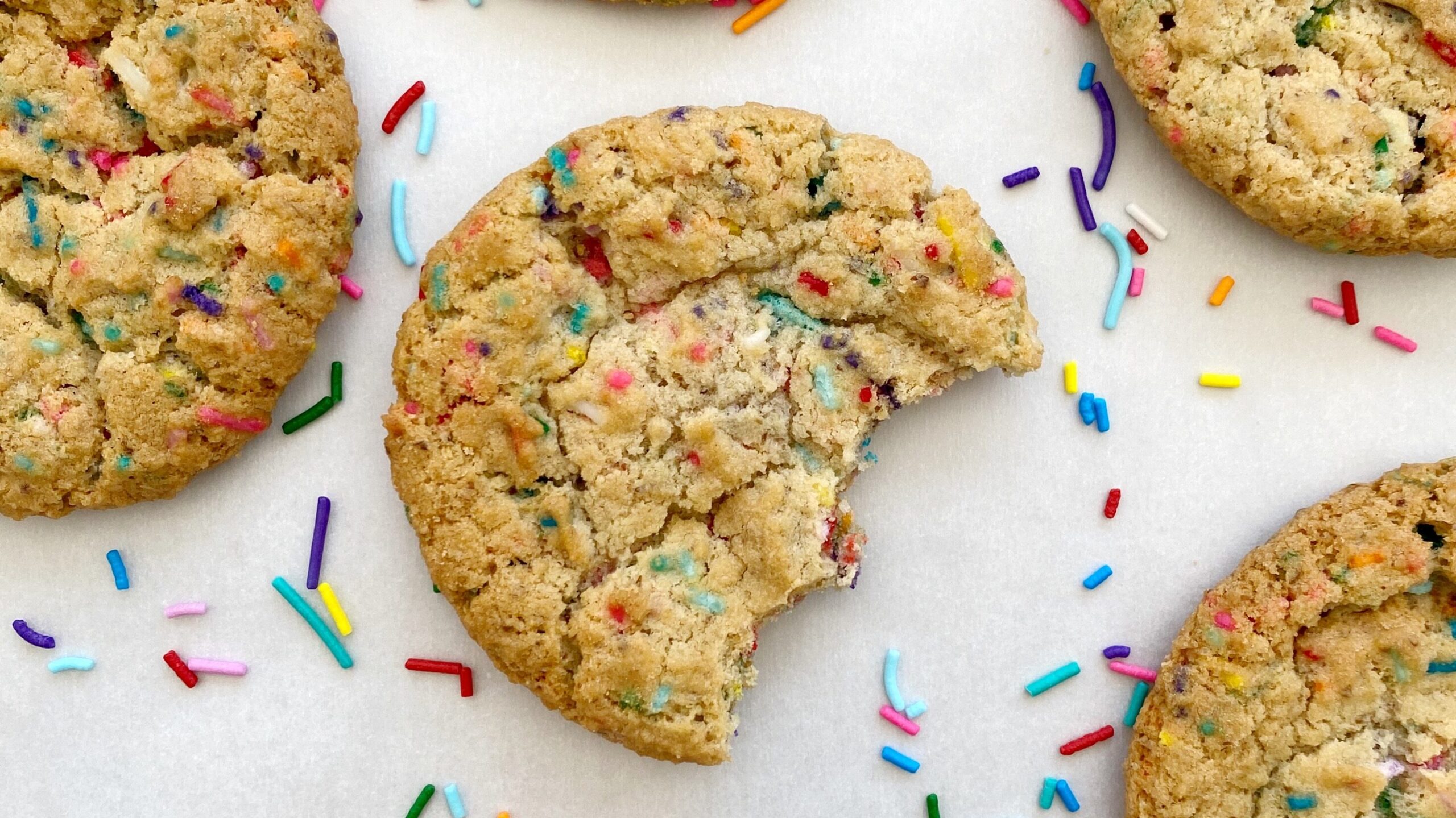
I had a single vegan option on my menu: the Vanilla Sprinkle Cookie. My best friend is vegan, so I thought I should have something she can eat. But she wasn’t the only one that was requesting dietary alternatives. Moms started stopping by the bakery before birthday parties to pick up a vegan treat for a child with an egg or milk allergy. The Vanilla Sprinkle Cookie was quickly becoming a best seller despite it being vegan. The challenge wasn’t just adding a vegan option. It was rethinking my approach to inclusive baking.
Tools & Methods: Customer Observation • Market Gap Analysis
The Insight
Inclusive Baking
Believe it or not, milk and eggs are among Health Canada’s priority food allergens, responsible for 90% of allergic reactions in the country. (That’s right up there with peanuts and tree nuts.) Many children with an egg or milk allergy may outgrow it within a few years, but that’s still a lot of birthday cake they’re missing out on.
Tools & Methods: Data Analysis • User Needs Assessment • Customer Segmentation
The Label Problem
But not everyone is eager to try vegan baked goods. Businesses will feel the need to offer a vegan option, but they’ll also make it sugar-free and gluten-free. Of course it’s not going to taste great when you’re trying to accommodate every food restriction into one single product. The result? People try these flavor-compromised treats and develop an aversion to anything labeled vegan. Or worse, they had one disappointing vegan dessert a decade ago and never gave plant-based baking another chance.
Tools & Methods: Behavioral Psychology • Customer Perception Analysis
The Approach
Uncompromising Quality
I wasn’t going to offer a vegan option just to check a box. My standard was simple: a new product doesn’t get added unless it’s my favorite thing in the whole display case. It had to beat out my Whiskey Chocolate Salted Caramel Cupcake made with traditional ingredients before it’s on the menu. This meant vegan products weren’t “alternatives” or “accommodations.” They were the main event, chosen based on flavor, not a dietary label.
Tools & Methods: Product Development • Quality Standards • Competitive Product Testing
Technical Breakthrough
Let’s be real—a cupcake is only as good as its frosting. Many bakeries will use an American buttercream because it’s easy to make vegan. You simply use a vegan butter and powdered sugar (and maybe a hint of plant-based milk). I find American buttercream to be too sweet and prefer a Swiss meringue buttercream. This is harder to make vegan as it consists of egg whites, white sugar and butter.
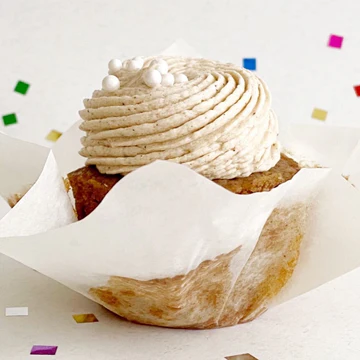
Early in my baking career, I was experimenting with a cereal flavoured cupcake at a Yorkville popup. A friend who’d won MasterChef suggested I try ermine frosting as the ‘milky’ frosting would complement the cereal flavor. I tried it, loved it, and filed it away. I remembered that frosting when I started to veganize my cupcakes. Unlike Swiss meringue buttercream (which relies heavily on egg whites), ermine uses milk as its base—easy to swap for coconut milk. It’s silkier and less sweet than American buttercream. This wasn’t just a vegan version of traditional frosting. It was better.
Tools & Methods: Recipe Development • Ingredient Innovation • Technical Problem-Solving
Operational Efficiency
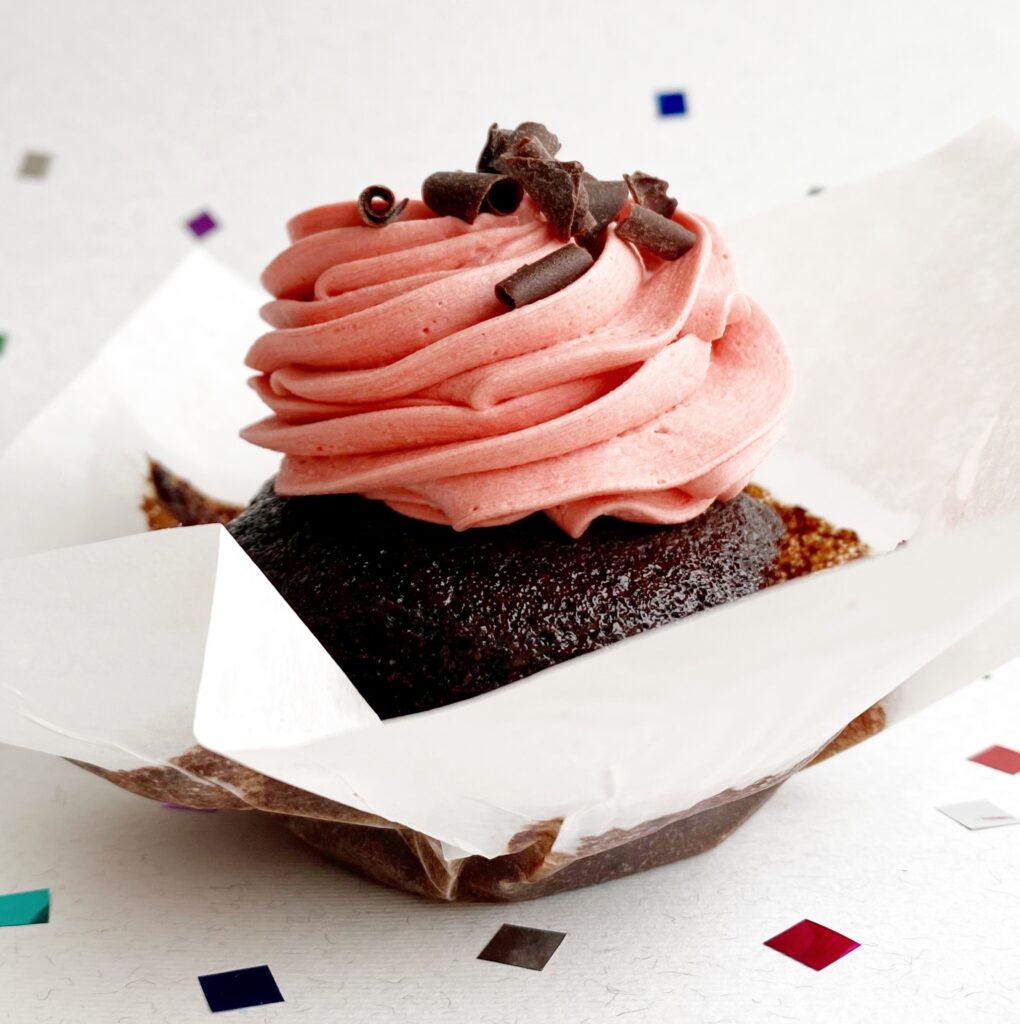
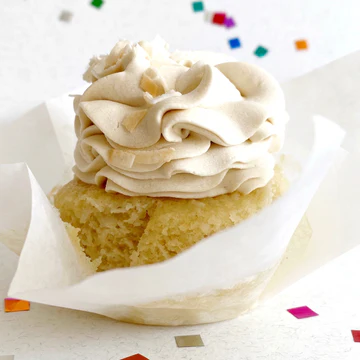
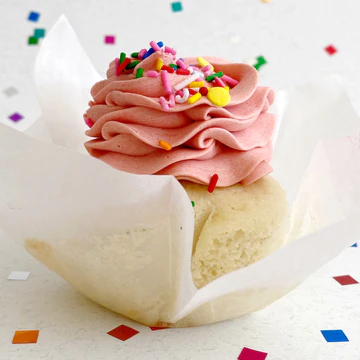
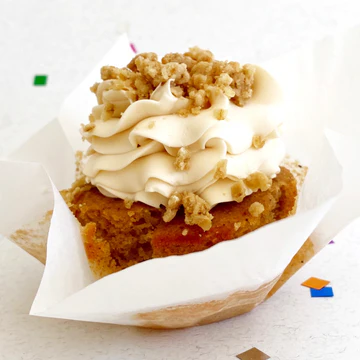
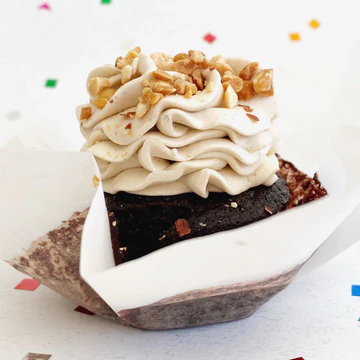
As a small startup, I didn’t have the capacity to bake a traditional and vegan cupcake in the same flavour, doubling my workload. I created one amazing flavour that happened to be vegan. Someone with a dietary restriction could choose from flavors like Cinnamon Bun, Peanut Butter Chocolate, Blueberry French Toast, or Strawberry Chocolate—and pick based on what sounds delicious, not what they’re “allowed” to eat. It also meant I wouldn’t get stuck with a bunch of vegan cupcakes at the end of the day that no one wanted. When you make the flavours fun, everyone wants them.
Tools & Methods: Operational Design • Production Efficiency • Inclusive Design Principles
Strategic Rollout
After the Vanilla Sprinkle Cookie, I gradually veganized my entire cookie line. However, I didn’t prominently label them “Vegan Cookies” at the East Lynn Farmers’ Market. Instead, I added a small note to my menu board: “Vegan Options Available.” When someone asked which cookies were vegan, I proudly whispered, “They’re all are.” The same strategy was used in the bakery. I included a small (V) next to the cookie and cupcake flavours that were vegan. It was often overlooked by customers, but was a signal for vegans to ask what other options I had available.
Tools & Methods: Customer Psychology • Stigma Reduction • Behavioral Design
The Outcome
Soldout Cupcakes
The strategy almost worked too well. Customers with no dietary restrictions started choosing my vegan cupcakes over the ones with traditional ingredients—because of the flavours. The Strawberry Chocolate Cupcake became a bestseller and I had to bake the Vanilla Sprinkle Cookie in batches of 12 dozen to keep them in stock. I began hiding the vegan cupcakes in the freezer to save them for actual vegans. This proved my core hypothesis: when products are genuinely excellent, dietary labels become irrelevant. People chose based on “I want the cinnamon bun flavor,” not “I need a vegan option.”
Tools & Methods: Impact Measurement • Customer Feedback Analysis
Cost Savings
Vegan ingredients are incredibly affordable and widely available. A brick of butter from Costco is about $5.70 while a vegan margarine from Valumart is $4.99. The savings are even more dramatic with egg replacements. A dozen eggs is about $3.93 while a 400g bag of ground flaxseed is $6.99, which gets me the equivalent of 57 eggs. Not to mention the space, mess and time saved from dealing with eggs versus flaxseed. In an industry with notoriously thin profit margins, these cost differences can significantly impact a small business’s bottom line.
Tools & Methods: Financial Analysis • Cost-Benefit Analysis • Business Case Validation
Reflection
Inclusive design isn’t about making special versions for special needs. It’s designing for the widest range of people, and making them them so good that everyone chooses them.